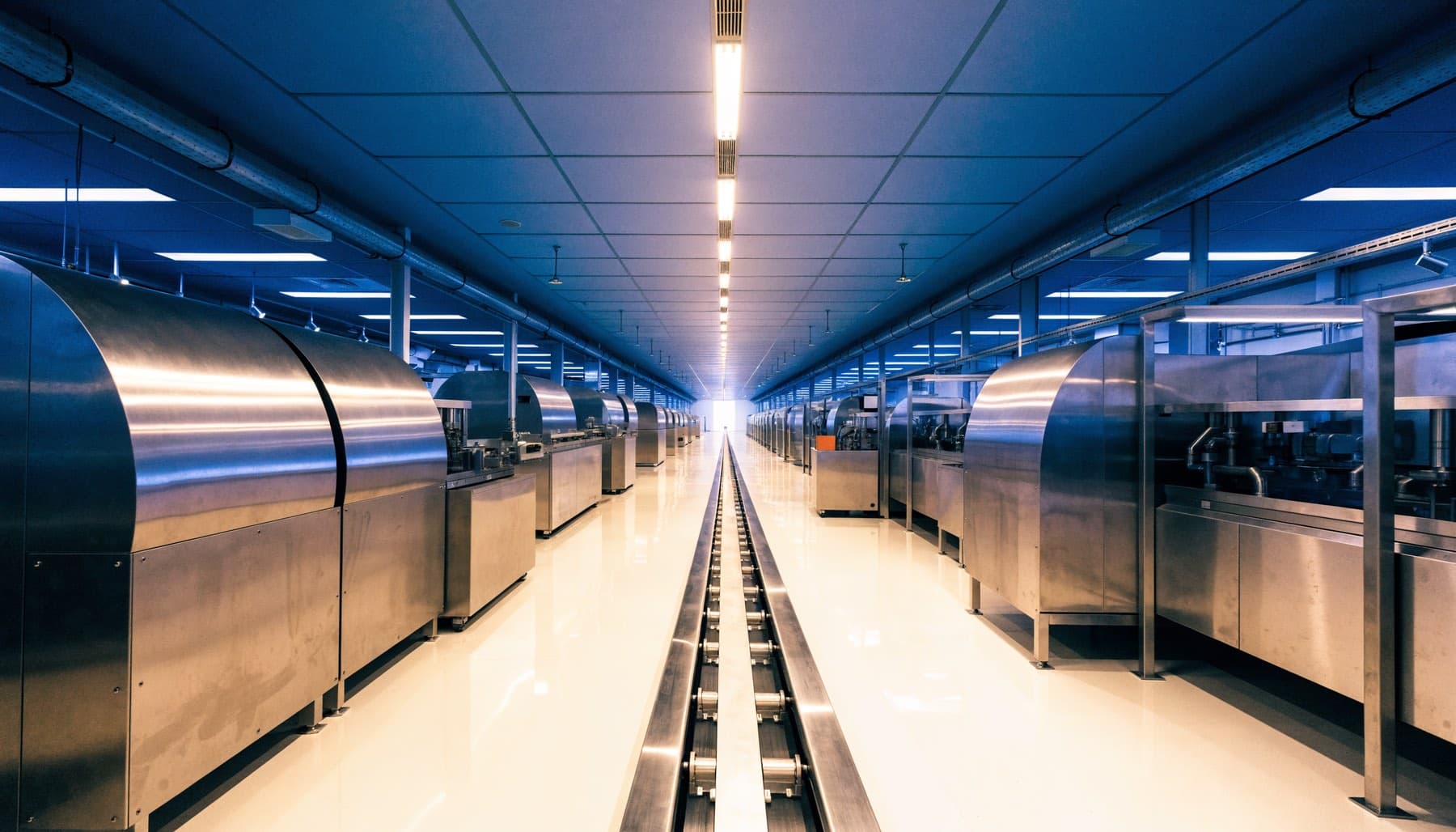
Importing a production line from China to the Gulf comes down to five stages: write a technical specification, choose the manufacturer from several comparable quotations, sign a contract with payments tied to production milestones, approve a recorded test run before anything is packed, then ship the line in containers to your factory floor. Most expensive mistakes happen in the first and fourth stages: a vague specification that every manufacturer reads differently, and a line that ships without being seen running. Plan the timeline with the sea leg in mind: freight to Kuwait currently takes 85-90 days including customs clearance, and it varies by destination across the Gulf.
This guide walks through each stage for bottling, plastics, packaging and filling lines, and lists the questions to settle in writing before you pay a deposit.
Stage 1: the technical specification
A manufacturer can only quote what you describe. If you send "a water bottling line" to five factories, you will receive five quotations for five different machines, and no way to compare them. The specification is the document every quote is measured against, so it deserves the most time.
Cover at least these points:
| Point | What to define |
|---|---|
| Capacity | Output per hour you actually need, and what you expect to need in a few years |
| Product | Exact product, sizes, materials and packaging format (for example bottle sizes, cap type, carton layout) |
| Floor space | Length, width and ceiling height of the hall, door sizes and where the line enters |
| Power and utilities | Your site's voltage and frequency, available power, water, compressed air |
| Environment | Heat, humidity and dust inside the hall during the hottest months |
| Raw materials | What the line will run on, and where those materials will come from |
| Level of automation | Which steps are automatic and which stay manual |
| Documents | Manuals, electrical drawings and the spare parts list you need with the line |
The electrical supply deserves a special mention. A line built for one market's voltage and frequency may need changes to run on yours, so state your site's supply in the specification rather than assuming the factory will ask.
Stage 2: choosing the manufacturer
China has machinery plants that build lines every day, and trading companies that resell them. Both will send you a professional quotation. The difference shows up later, when you need a change during production, a spare part in a hurry, or a technician who knows the machine.
Collect comparable quotations. Send the same written specification to several manufacturers and ask each one to quote against it, item by item: price, build time, main components and their brands, the spare parts included and the payment terms.
Check the manufacturer before any payment. A site visit is best. If that is not practical, ask for a live video walk through the workshop and of the same model running at another customer's site. A plant that builds lines can show you lines. A reseller has to ask permission from someone else.
Read what the quotation includes. Installation, commissioning and operator training are handled differently by every manufacturer. Some include them, some charge separately, some offer remote support only. Whatever the arrangement, confirm it in writing in the quotation, with who travels, for how long and who pays for what. Do the same for the warranty terms the manufacturer offers. Never assume any of these.
Our guide to telling a factory from a trader applies here too, with higher stakes.
Stage 3: the contract and milestone payments
A production line is built over weeks, not taken off a shelf. Tie your payments to milestones you can verify rather than to dates:
- A deposit on signing the contract and approving the final layout.
- A progress payment when the main components are built, confirmed by photos and video.
- The balance after you approve the test run, and before the line is packed.
During production, ask for photo updates every week. A delay that is visible in week three can still be managed. A delay discovered the week the line was due to ship cannot.
Stage 4: the test run before shipment
This is the single most important step. Before the line is taken apart and packed, it should run inside the manufacturer's workshop, with the result recorded on video and in writing.
A useful test run checks:
- Output speed against the capacity in the contract
- Reject rate over a sustained run, not a few minutes
- Product quality using your own sample materials, bottles, caps or film where possible
- Changeover between product sizes if your line needs more than one
- Safety features and emergency stops
- Completeness against the packing list: every machine, panel, spare part and document
The rule is simple: the line does not ship until you approve the test run. Once it is in containers, every fix becomes slower and more expensive.
Stage 5: packing, freight and delivery to the factory floor
A production line usually travels in several containers, with machines fixed, crated and protected against moisture for a long sea journey. Ask the manufacturer for a packing list that numbers every crate and states its dimensions and weight. That list drives the freight plan and makes checking on arrival far easier.
Plan the time:
- Build time, as stated in the manufacturer's quotation
- Sea freight, currently 85-90 days to Kuwait including customs clearance, varying by destination across the GCC
- Delivery to site, which depends on access to your hall and the equipment needed to unload heavy machines
Container prices move with the market. In autumn 2026 a 20ft container from China has been running at around USD 13,000, which makes a precise packing list and well-planned container loading worth real money on a multi-container line. Our guide to shipping costs from China to the GCC explains how a complete freight quote should read.
After the line arrives
A line is only as productive as what you feed it. Raw materials, spare parts and recurring consumables are the costs that continue for as long as the line runs, and they are often bought in a hurry, at whatever price is available. Set up their supply before the line starts production: the right grade, a written specification and an order calendar that accounts for the sea leg.
Common mistakes and how to avoid them
| Mistake | How to avoid it |
|---|---|
| Comparing quotations built on different specs | Send one written specification and ask every manufacturer to quote against it |
| Paying most of the price before production | Tie payments to verified milestones |
| Shipping without a recorded test run | Make your written approval of the test run a condition for packing |
| Assuming installation and training are included | Confirm both, and the warranty terms, in writing in the quotation |
| Forgetting the electrical supply | State voltage, frequency and available power in the specification |
| Leaving raw materials until the line is installed | Arrange supply and specifications before start-up |
How we work on production-line projects
Dr.Ship is headquartered in Kuwait and supplies machinery and production lines to factories across the GCC. We turn your requirement into a technical specification, collect comparable quotations from vetted machinery plants, check the manufacturer before any payment, follow production every week with photos, and hold the line until you approve a recorded test run. Then we arrange containerised sea freight, customs clearance and delivery to your site, and supply the raw materials, spare parts and consumables the line runs on. What each project includes for installation and training is confirmed in writing in the manufacturer's quotation.
See the full scope on our machinery and production lines page, or send us your project: the product and the capacity you need are enough to start. If your factory already buys raw materials or packaging from China, our free 72-hour check shows you what you pay above factory price on those purchases, item by item.